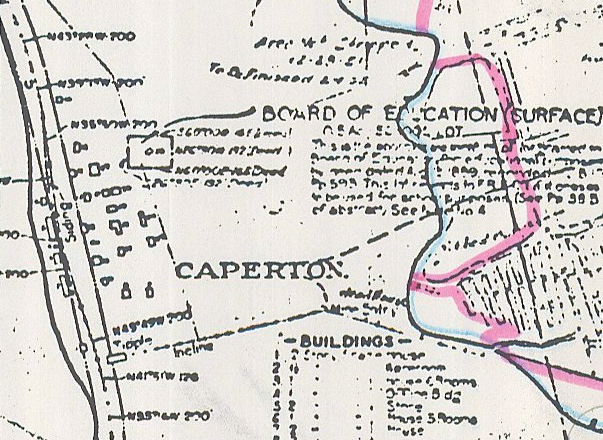
This mining town was built in 1881 by George Caperton (in partnership with Joseph Beury and John Cooper) alongside the main line of the Chesapeake and Ohio Railroad. Caperton was later president of The New River Company. Names associated with Caperton in the 19th Century included Caperton Colliery Co. and New River Coke Co. In the early 1900s the Caperton mines were operated by Victoria Coal & Coke. It has been suggested by others that this firm was owned by Queen Victoria of England, but it was actually controlled by the Empire Steel & Iron Co. of New Jersey. In 1897, Victoria went across the New River and opened the South Caperton mine. Thereafter, the original Caperton mine was known as "North Caperton." By 1905, Chapman Iron, Coal, & Coke Co. was operating North and South Caperton Mines. State mine records indicate North Caperton was nearly exhuasted in 1905 and still using old-fashioned furnace ventilation. However, a new mining section was opened at Caperton in 1902 named "Sugar Camp." South Side Coal Co. became the operator of South Caperton in 1906 and successfully mined coal there for many more years. Sewell Colliery Co. owned the Sugar Camp mine beginning in 1909 and continuted to operate the beehive coke ovens for a time. Premium Smokeless Colliery produced small amounts of coal from the Caperton mines during the Great Depression. However, all Caperton mining ceased by the '40s or '50s. The school for white children was closed in 1952, the post office in 1954, and the town was abandoned shortly thereafter.


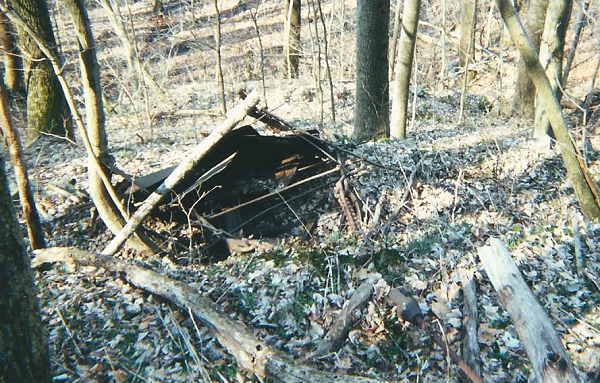
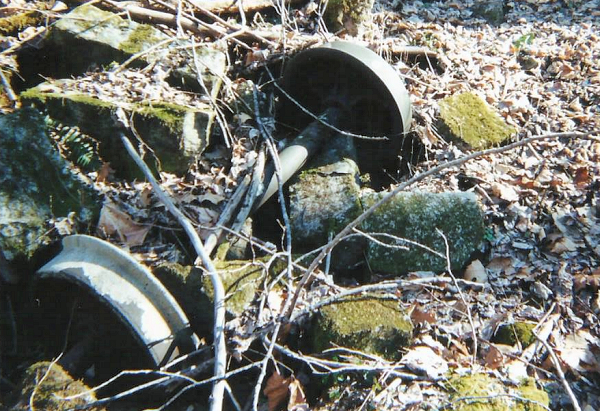

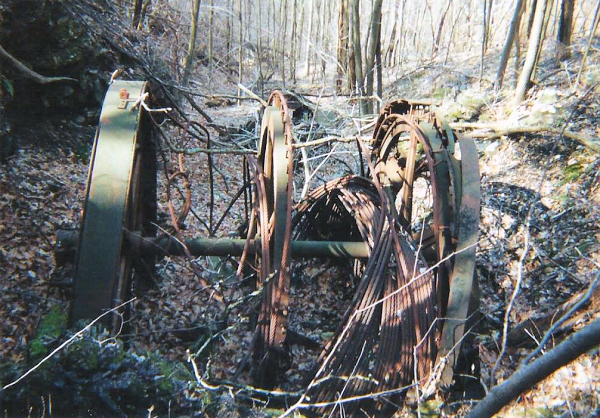


"The term 'ghost town' implies former activity, perhaps greatness, as manifested in decrepit buildings and other ruins. A ghost town is a place that is being reclaimed by nature, and we seem to take a perverse interest in the aesthetics and symbolism of time marching into, and over, such forlorn places," says Richard Francaviglia in "Hard Places, Reading the Landscape of America's Historic Mining Districts."