Clyde Mines No. 1, 2, and 3 were all started by different coal companies, and by the late 1920's they had all been
incorporated into the W.J. Rainey Coal Company's portfolio of mines. However, the Clyde Mines
are best remembered as being owned by Republic Steel Co. Clyde No. 1 was on the edge of Fredericktown, Clyde No. 2 was nearby in
Pitt Gas, and Clyde No. 3 was not far away in Williamstown.
Image courtesy of Don Stickel
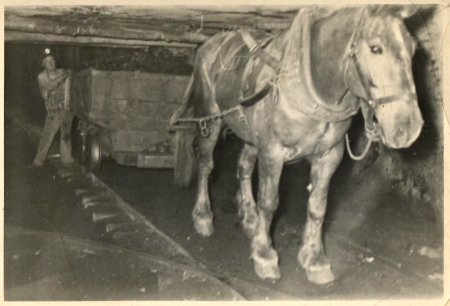
A great and rare photo sent in by Don "that was passed on to me after my Grandfather was killed at Clyde mine. It's of a horse pulling a wagon
out of the pit mouth. I doubt there are many pictures of Clyde from that long ago. I'm pretty sure the horse is in Clyde 1. Clyde 3 is out in the country and
is just an elevator shaft and a bath house - no gradual slope like the entrance to Clyde 1."
Dec. 2003 image by author
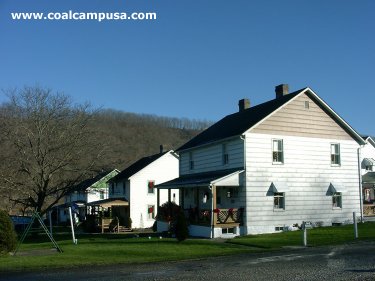
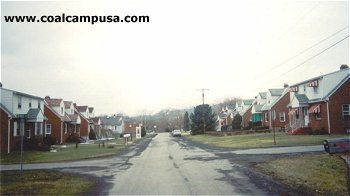
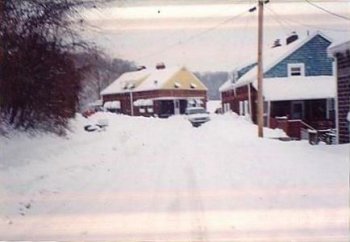
These company-built houses south of Fredericktown were for the employees of the Clyde No. 1 Mine, and are typical of Pennsylvania coal
company housing. Clyde No. 1 was opened in 1900 by the Clyde Coal Company.
Mar. 2003 image by author
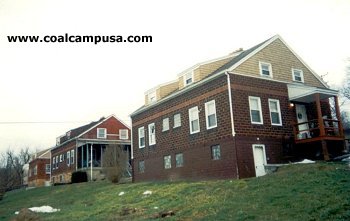
Red block houses at the coal mining patch of Pitt Gas housed the workers of Clyde No. 2 Mine. These company homes
were constructed in 1929, and I've never seen patch houses quite like this anywhere else. Pitt Gas was actually in Greene County, and the coal came across a conveyor over Ten Mile Creek to a tipple
on the Washington County side.
Mar. 2003 image by author
Pitt Gas, Pennsylvania.
Mar. 2003 image by author
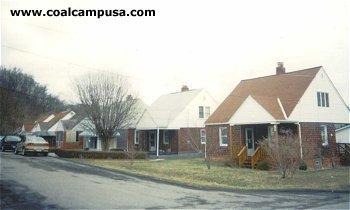
Red block coal patch housing at Williamstown built by Republic Steel Company for miners of their Clyde No. 3 mine. This was probably one of the last patch towns built by a coal company in Western Pennsylvania, and the
reforms in workers housing are evident in this photograph.
Mar. 2003 image by author
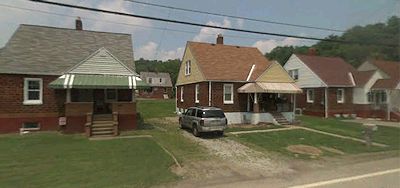
Another section of unusual red brick patch housing at Williamstown. Pat writes, "My grandfather was a 'boss' at the Clyde #3 Mine (Williams[town]) in Washington Co, but just across the creek from Clarksville in Greene Co. The whole area went under the name of Clarksville to the locals.
Being a 'boss', my grandfather and his family lived in one of the red cinderblock houses on the front row. There were shotgun houses on some of the other streets, plus bachelor houses across from the mine itself. Some of the wooden houses were four rooms all on one floor.
The red cinderblock houses were two stories and I think had basements. Up on the hill overlooking the mine there were other houses and there was, I am told, even a special section for Negroes." Google Street View image
Another view of Williamstown coal company houses.
Mar. 2003 image by author
The coal company built a row of garages for those mining families that owned a car.
Image source forgotten
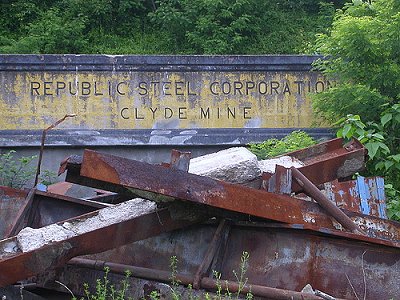
The old portal remains from the Clyde No. 1 Mine.
Apr. 2009 image by author
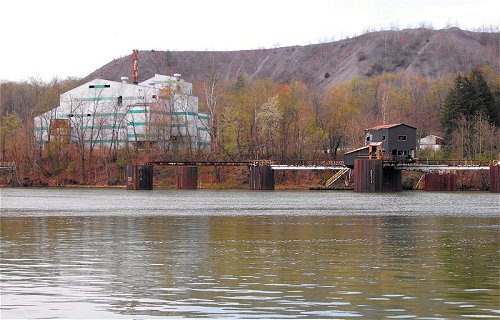
This preparation plant along the Monongahela River was operated by Republic Steel as well. It was next to the Clyde No. 1 company homes pictured above, and is now
demolished. Note the large gob pile behind the plant.
Dec. 2003 image by author
Part of the barge loadout from the Clyde Mines on the Monongahela River. I don't know who was receiving river shipments from Clyde via barge, because in 1969 the shipment from Clyde mines to Republic's coke ovens
in Warren and Youngstown, Ohio was listed as "all rail." Yet historic aerial imagery clearly shows barges being loaded here from the 1960s until the 1990s. Image by Don Stickel
Don sent in this picture and wrote, " I grew up in Pit Gas and worked at Clyde Mine until it closed. The
duplex houses in Pit Gas had a basement. My dad had a huge Lionel Train set up in ours. I wanted to thank you for posting the pictures of
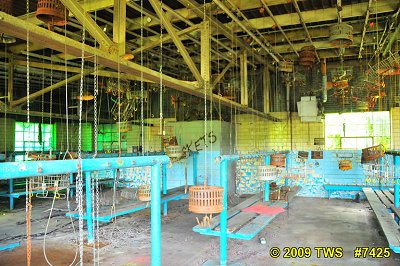
our old bath house more than any other place. I didn't think I would ever see it again. I had a ball showing my wife where and how we use to
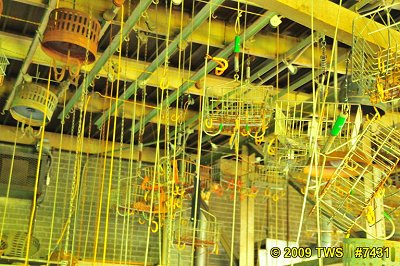
change from our work clothes to street clothes and then run the basket back up to the ceiling for the next day."
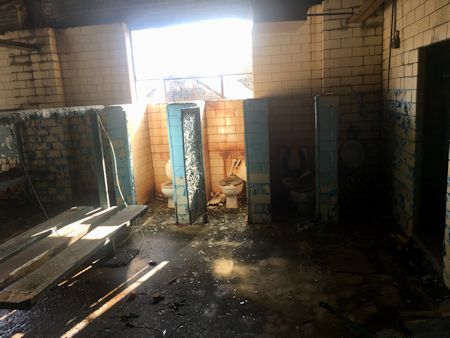
Nov. 2017 image by Tom Lent & Ron Franko
Inside the abandoned Clyde Mine bath house.
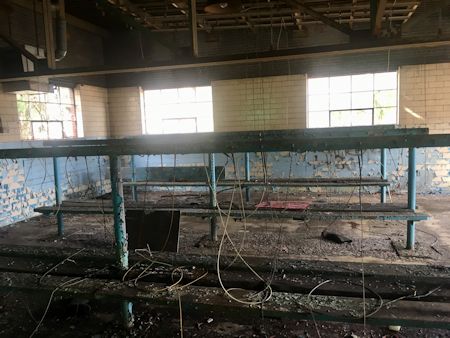
Nov. 2017 image by Tom Lent & Ron Franko
Another view of the bath house. The chains and cables are from a system where the miners' clothes were stored in baskets and raised to the ceiling. Nov. 2017 image by Tom Lent & Ron Franko
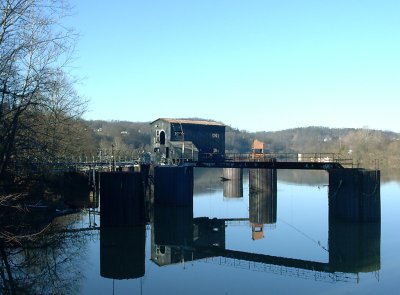
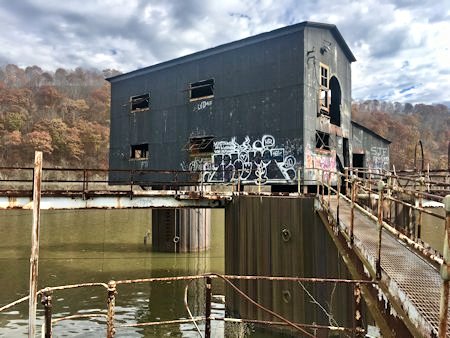
By 2017 the prep plant was gone but this river loadout was still there. This was where the coal was loaded
onto barges. Nov. 2017 image by Tom Lent & Ron Franko
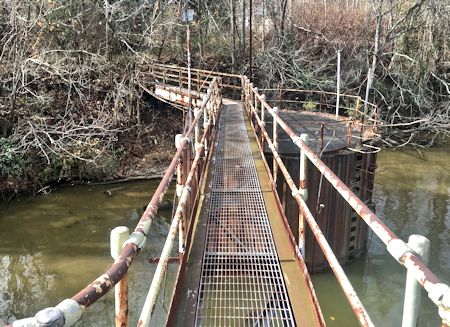
Cat walk out to the river loadout.
June 2004 image by author
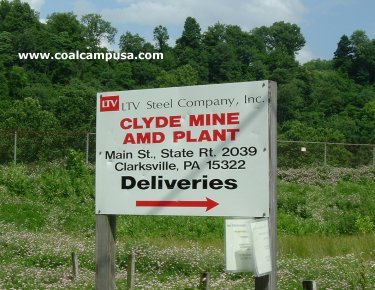
This acid mine drainage treatment plant along Ten Mile Creek is the final chapter in the Clyde Mines saga.
2018 Pictures
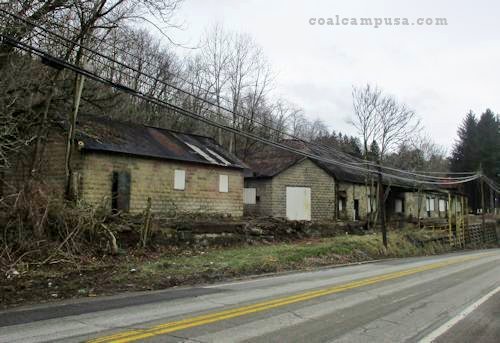
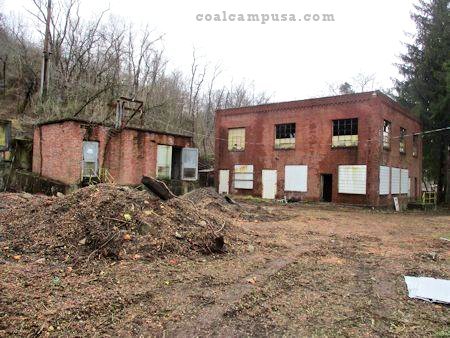
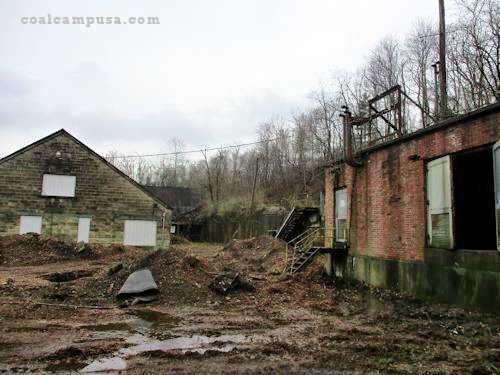
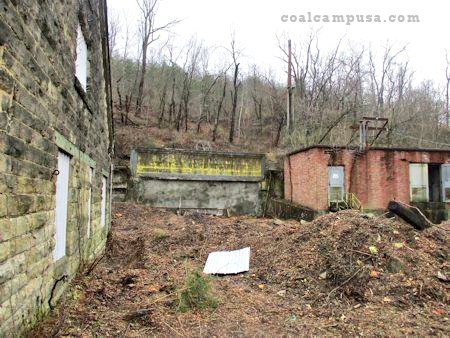
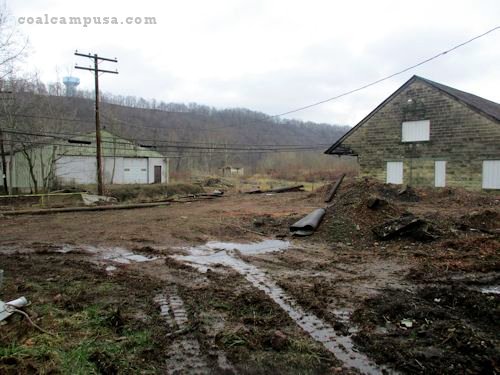
On Good Friday 2018 I was passing through Fredericktown and I decided to stop and check out these old Clyde Mine buildings that I noticed many years ago but never explored:
Mar. 2018 image by author
The building on the left was once the press shop, and the larger one was once the machine shop and supply building.
Mar. 2018 image by author
The smaller structure on the left was at one time a generator house. The larger building used to be the foreman's office.
Mar. 2018 image by author
Machine shop and generator house.
Mar. 2018 image by author
Looking between the machine shop and generator house one can find the sealed up portal to Clyde No. 1 mine.
Mar. 2018 image by author
View past the machine shop (on right) shows where the coal cars that came
out of the mine used to travel over a bridge over Route 88 to the prep plant on the other side. The prep plant, which was in the empty
field seen across the street, was demolished circa 2011. The structure with green sheeting was where the rotary dump for the coal cars was located.
Mar. 2018 image by author
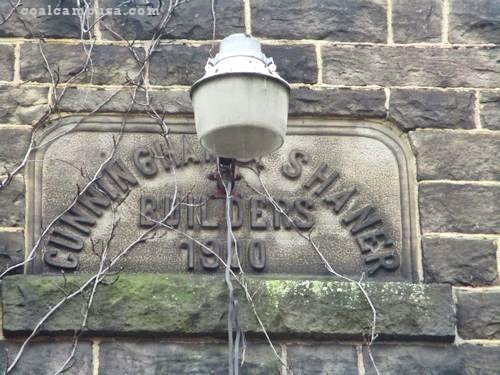
The shop building was built in 1900 by Cunningham Shaner Builders. It is still a robust looking building despite years of neglect.
Mar. 2018 image by author
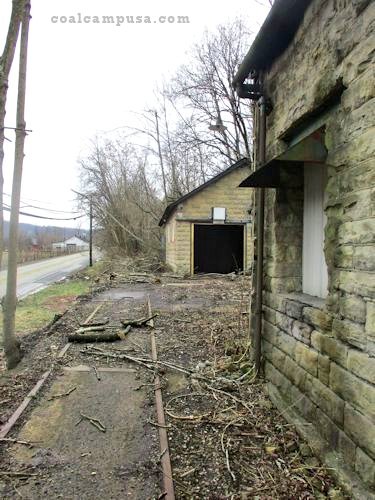
Steel rails ruinning in front of the machine shop to the press shop.
Mar. 2018 image by author
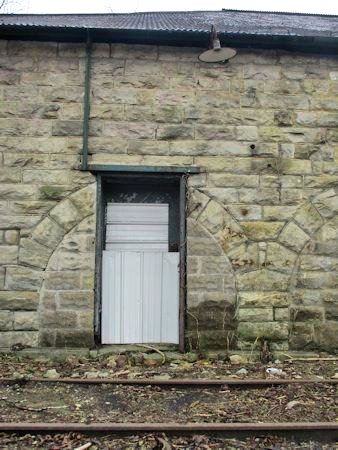
Detail of the front of the machine shop / supply house.
The following pictures were taken by Tom Strong:
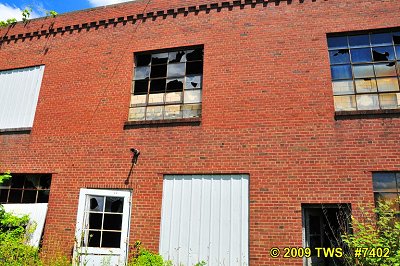
Mine offices or shops
Clyde bath house
Bath house detail
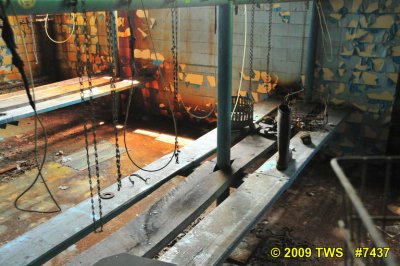
Inside bath house
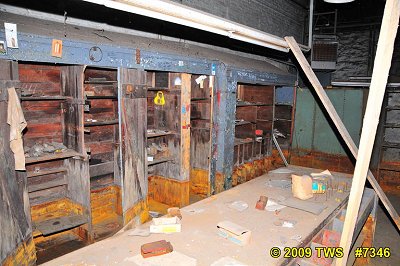
Supply room in ruins
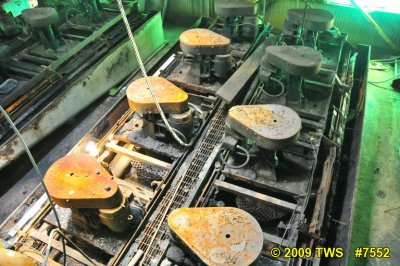
Equipment remaining in the prep plant
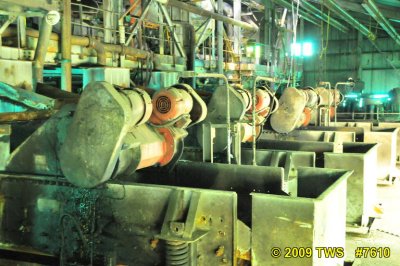
Vibrating screens in the plant
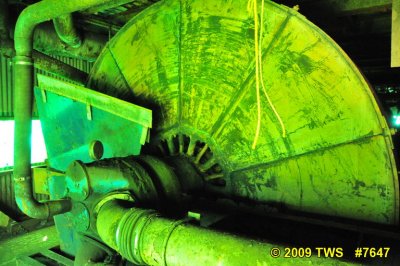
Disc filters in the plant
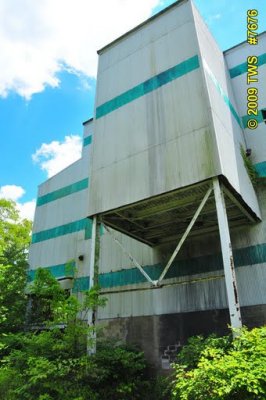
Outside the preparation plant
We are fortuante enough that Larry Durdines shared his memories of growing up at Williamstown with us: "I grew up in Williamstown, born in the house that my grandfather built in the 1920's.
Williamstown was a great place to grow up. I can remember 5 or 6 boxy little Baldwin S2's hooked together pulling trains through Williamstown as we played baseball on the field behind the company store. The Sharks were my favorite, very shiny black and the toothy MRy grin under the nose. I wasn't very good at baseball even though my father was the coach, but I remember the trains.
We called the area across from the mine Upcreek and next to the swinging bridge Shantytown . In the late 50's early 60's no one lived there anymore and the last to live there were mostly Black people. There were a few foundations showing, some sidewalks and a broken lumber laying around that we kids used to fuel fires for all night fishing parties. In the summer this overgrown area would produce rose bushes that would burst with huge flowers.
Even as a kid I thought it was kind of sad - all the bright red roses returning and the people so long gone now. It's a sewage plant now.
There were plans at one time to build the railroad to Marianna by way of along the north bank of the north branch of Ten Mile Creek. That would have brought it right along the edge of my yard.
Our company store was large and modern. Everything could be bought there - clothes, food, hardware, gasoline ( Gulf ). I once even saw Aunt Jemima making pancakes there on a PR tour. You could only get 2 cartons of cigarettes at a time on credit because miners would trade them for drinks at the bars in town. There was a branch of the Fredericktown bank there beside it. Our home was built by my grandfather and was between the patch and the north fork of the creek.
When asked how it was we came to have a fine big frame house, large porch and outbuildings, even a small barn, my Aunt said her father always saved his money, never drank and was then able to afford to build. They kept chickens and a cow which would have been hard to do in a patch house.
The Black miners, and a few whites, lived on the hill above town. Some of the streets and most of the alleys were unpaved up there as opposed to the patch down below. I'm going to guess there were 30 some Black families living in more or less identical brick patch homes. It strikes me now that must have been the company's plan when they built those houses on the hill, away from the "white" patch . Between the patch and the hill there was a Black church (Church Of The Living God) and the singing was wonderful .
It was like most of America at the time, "separate but equal". One black man lived in a house across the road from us and his wife was a white lady and though it seemed to be frowned on, it was never discussed or criticized. He had a rambling building of corrugated steel where he worked on cars and machinery. He was known as Blacksmith because thats what he did. Black and white were all taught respect each for other and there was never any trouble over race . Men working side by side in the mine was somewhat of an
equalizing influence. Many were fast friends. When a miner died at work, whether by accident or natural causes, a good friend of that man would bring his hat, bucket and other personal effects to the deceased's family. When my father died of a heart attack in Clyde, it was a black man who brought my Dad's gear to our house after work that day.
The school, attended by all, was there also, a huge two story frame building. Mr. Blackburn was the principal. He was tall and gaunt, wore rusty black suits and was very stern. On the playground he would blow his nose between thumb and finger, and we kids were amazed by that . He walked the tracks from Fredericktown every day and only rode the school bus in the most severe weather. Big events were Mitchell day - a miner's holiday with speeches, patriotic and Union readings and talent shows. Very popular were church picnics. St Thomas's had gambling and
beer and whiskey and all the young and old miners would be out in white shirts, standing under the trees at makeshift counters and drinking. The priest used to go to the bars and have a few beers with the other men occasionally. That was much admired by them. There were 5 very busy bars and a couple speakeasies in Williamstown and Clarksville alone.
Since the patch was built there was always baseball behind the company store in the shadow of the slate dumps. I never heard the words 'gob pile' used by miners. In 1960 we had four teams of Little League players just from Clarksville, Williamstown, Besco and Pitt Gas. The older guys had a Pony League team. Besco had old coke ovens and I remember several being lived in by retired miners. We laughed about that as kids. The slate dumps smoldered and we never walked on them. Indeed some had spots that smoked and glowed a dull red year round."
Sources:
Washlaski., Raymond A. Washlaski, Ryan P. Virtual Museum of Coal Mining in Western Pennsylvania. TLC Pu patheoldminer.rootsweb.ancestry.com/.